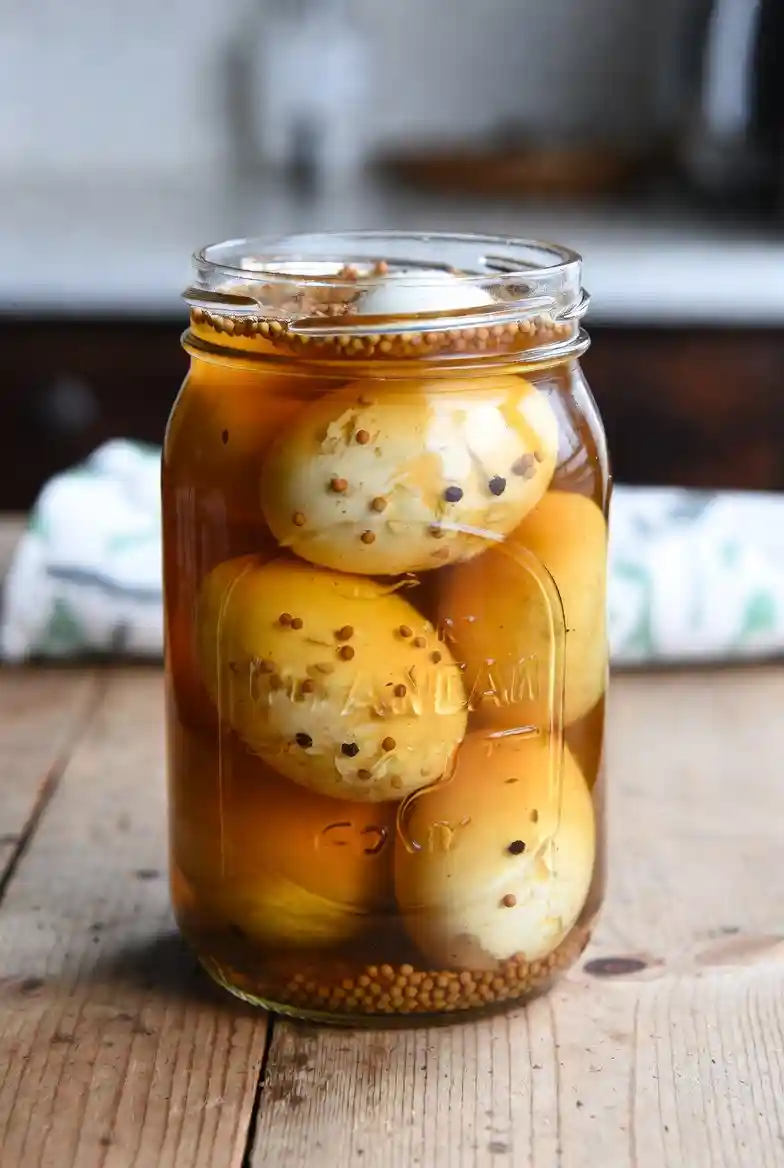
Old‑Fashioned Pickled Eggs Recipe
Pickled eggs taste tangy, savory, and slightly sweet, depending on how you make the brine. An old‑fashioned pickled eggs recipe usually starts with hard‑boiled eggs and a vinegar‑based liquid called a brine. These eggs are great on cheese boards, in salads, or eaten straight from the jar as a snack.
Making pickled eggs at home is cheaper than buying them from the store. You only need a few basic ingredients and a clean jar. The process is simple enough for beginners, yet flexible enough that cooks can adjust spices and sweetness to their taste. This recipe is written so anyone can follow it, even if they have never tried making pickled eggs before.
What Are Pickled Eggs?
Pickled eggs are hard‑boiled eggs stored in a vinegar‑flavored liquid called a brine. The brine slowly soaks into the egg, giving it a sharp, tangy taste. Over time, the white turns a bit chewy and the yolk softens, while the outside can take on colors like pale yellow or pink if beets are used.
How to make pickled eggs follows a pattern used for many old‑fashioned foods. A salty‑sour brine preserves the egg while adding flavor. This method was common in farm kitchens when refrigeration was limited. Today, people still enjoy pickled eggs as a snack, salad topping, or part of a charcuterie board.
Why Make an Old‑Fashioned Pickled Eggs Recipe?
An old‑fashioned pickled eggs recipe highlights simple ingredients and slow‑developing flavor. Many cooks like this style because it feels “from scratch” and ties back to family traditions. The method does not need fancy tools or special equipment, just a pot, a jar, and common pantry items.
Making pickled eggs at home is also easy to control. You decide how strong the vinegar taste is, how much sugar to add, and which spices to include. Some people prefer a spicy kick, others like a milder, more sour note. A homemade pickled egg recipe allows for all of these small changes without changing the core steps.
Basic Ingredients for Pickled Eggs
- Vinegar
- Water
- Sugar
- Salt
- Spices (such as peppercorns, mustard seeds, or cloves)
Optional flavor additions:
- Garlic (for a stronger savory taste)
- Onion (for mild sweetness and aroma)
- Black pepper or chili flakes (for heat and spice)
For beet pickled eggs:
- Sliced beets or beet juice
- Same basic brine ingredients as above
- Beets give the eggs a light pink or reddish color
- They also add a slightly earthy, sweet flavor
Most pickled egg recipes use a small set of standard ingredients. You can find them in a regular grocery store and you may already have some at home. The goal is to build a balanced brine that tastes good on its own, not too salty or too sweet.
For a classic pickled egg recipe, you typically need: vinegar, water, sugar, salt, and a few spices. Some cooks add garlic, onion, or peppercorns for extra flavor. If you want beet pickled eggs, you also need sliced beets or beet juice. These simple additions give the eggs a soft pink color and a light earthy taste.
Choosing the Right Eggs
Fresh eggs are best for hard‑boiling, but they can be harder to peel than older ones. For a smooth, easy‑to‑peel shell, many home cooks use eggs that are at least a week old. These eggs still taste great and are easier to work with when making pickled eggs.
When you buy eggs, check the date on the carton and choose a size that fits your jar. Large eggs are common, but medium ones can stack better if your jar is narrow. Always wash the shells before boiling, even if they look clean. This step helps keep the finished pickled eggs safe and hygienic.
Simple Brine for Pickled Eggs
A basic pickled egg recipe uses a brine of vinegar, water, sugar, and salt. The vinegar is the main preserver, while sugar and salt adjust the flavor. The water helps balance the sharpness so the brine is not too harsh.
To make the brine, heat the liquid on the stove just until the sugar and salt dissolve. Bringing it to a gentle simmer is enough; you do not need to boil it hard. Once the brine is hot, let it cool a little before pouring it over the eggs. This keeps the eggs from overcooking and keeps the texture pleasant when you eat them.
Spices and Extra Flavors
Spices help turn a plain pickled egg recipe into something special. A common choice is pickling spice, which blends mustard seeds, cloves, allspice, and other warm flavors. You can buy this mix in the spice aisle or make your own from single spices.
Some cooks add garlic, onion slices, or jalapeños for a stronger taste. These extras give the brine more depth and can change the color slightly. For beet pickled eggs, thin beet slices or bottled beet juice add a soft pink hue and a mild sweetness. Always remove any whole cloves after a few days if you do not want very strong spice notes.
How to Make Pickled Eggs
Follow these steps to make pickled eggs safely and with good flavor. The key is to keep everything clean and to let the eggs sit in the brine long enough for the taste to develop. Do not rush the process; better flavor comes with time in the fridge.
Step 1 – Boil and Cool the Eggs
To make pickled eggs, start by hard‑boiling the eggs. Place them in a single layer in a pot and cover with water about an inch above the shells. Bring the water to a boil, then turn off the heat and cover the pot. Let the eggs sit in the hot water for about 10–12 minutes.
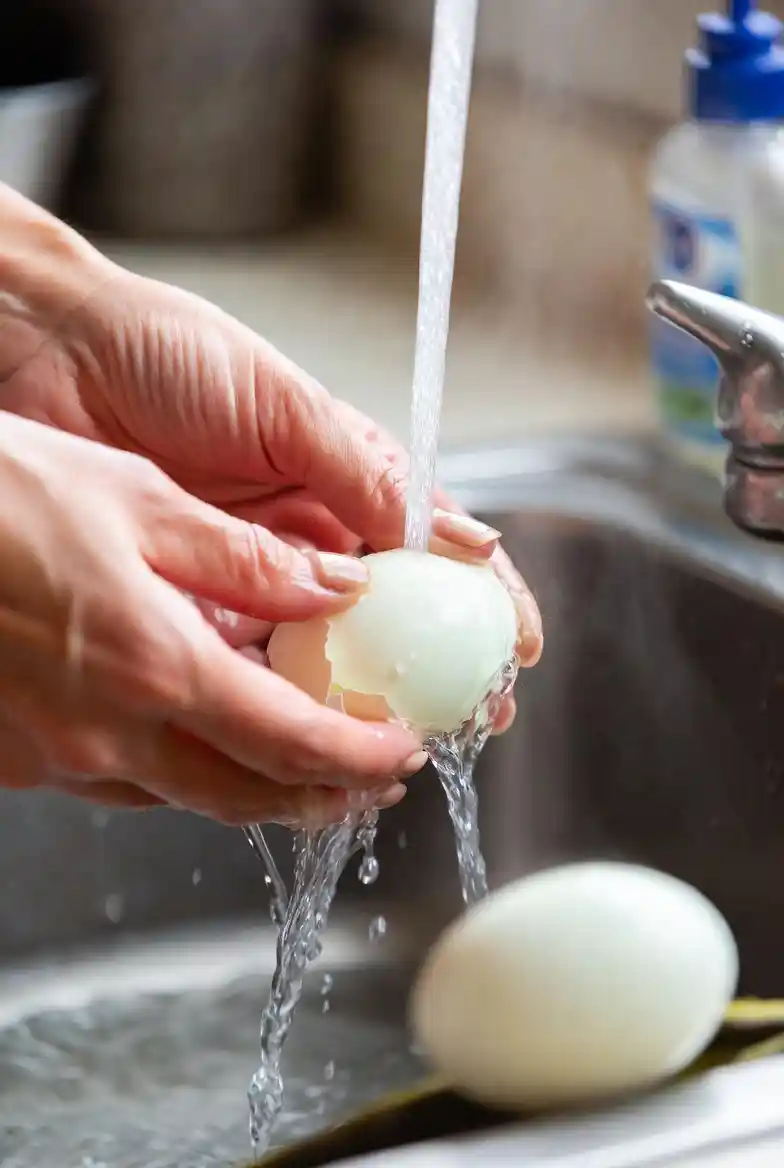
After this time, pour out the hot water and run cold water over the eggs. This stops the cooking and makes the yolks creamy, not chalky. Once the eggs are cool, tap them gently to crack the shells, then peel them under running water. Smooth, fully peeled eggs look and taste better in the jar.
Step 2 – Prepare the Jar
Use a clean glass jar with a tight‑fitting lid for your pickled eggs. A quart‑sized jar works well for about a dozen large eggs. Wash the jar in hot soapy water or run it through the dishwasher before use. Rinse it well and let it air‑dry or dry it with a clean cloth.
If you plan to add beets or extra spices, place them in the bottom of the jar first. Sliced beets will sit under the eggs and slowly share their color. A few peppercorns, a small garlic clove, or a bay leaf can go in now too. This keeps the spices at the bottom where they can release flavor as the eggs sit.
Step 3 – Pack the Eggs in the Jar
Carefully place the peeled hard‑boiled eggs into the jar. Do not force them if the jar is too tight; eggs can crack if you squeeze them too hard. A small to medium gap between the eggs is fine since the brine will fill the space.
Make sure the eggs are all the way at the bottom and not floating on top. If an egg stands on end, gently push it down so it lies flat. This helps the brine surround each egg evenly. Once all the eggs are in, check that there is still room at the top of the jar for the brine.
Step 4 – Make the Pickling Brine
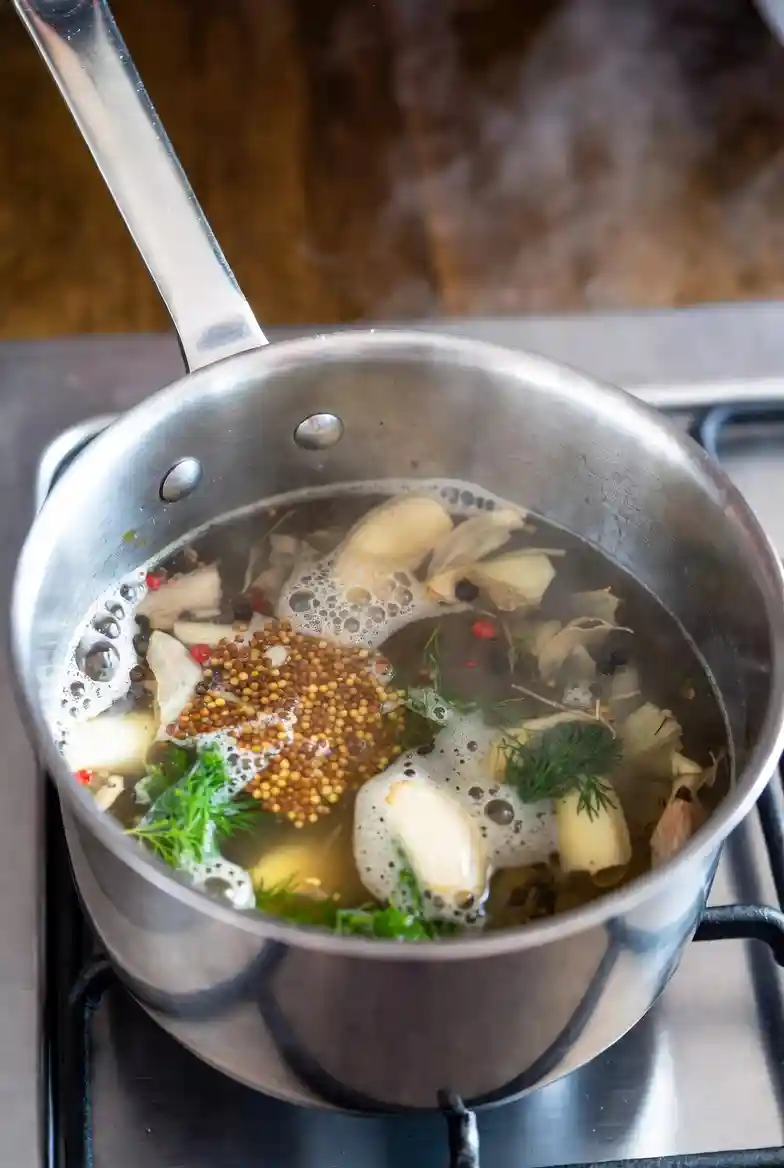
Combine vinegar, water, sugar, and salt in a small saucepan. A common ratio is about half vinegar and half water, with a spoonful of sugar and a smaller amount of salt. Adjust the amounts if you like a stronger or milder taste.
Heat the mixture on the stove until the sugar and salt dissolve. Stir gently but do not let it boil hard. After a few minutes, remove the pan from the heat and let the brine cool slightly. If you are using pickling spice, add a teaspoon or two to the pot while it is hot.
Step 5 – Pour Brine Over the Eggs
Carefully pour the warm brine into the jar of eggs until they are fully covered. The liquid should rise to the top of the jar, leaving only a small gap under the lid. If the brine does not cover every egg, heat a little more vinegar and water and add it until the eggs are submerged.
Once the jar is full, screw the lid on tightly. Turn the jar gently to make sure the brine spreads evenly. Let the jar cool to room temperature before placing it in the fridge. This slow cooling helps the eggs soak up flavor without becoming rubbery.
Step 6 – Let the Eggs Pickle
Place the sealed jar in the refrigerator and let the eggs sit for at least one week. The longer they stay in the brine, the stronger the flavor becomes. Many cooks like to wait two weeks before eating them for the best taste.
Shake the jar lightly every day or two to move the brine around. This helps the eggs absorb flavor evenly. If you use beets, you will notice the liquid turning pink and the egg whites slowly changing color. Check the brine now and then for cloudiness or strange smells; if it looks or smells off, discard the jar.
How to Serve Pickled Eggs
When the eggs are ready, they can be eaten in many ways. Some people enjoy them cold, straight from the jar, as a high‑protein snack. Others slice them in half and place them on sandwiches or salads for extra flavor and texture.
Pickled eggs and beets make a colorful side dish for picnic plates or party trays. Dollop a few eggs on a salad with lettuce, cheese, and a creamy dressing for a hearty meal. They also work well on a cheese and charcuterie board, where the tangy notes balance the fat from cheese and cured meats.
Tips for Making Pickled Eggs
A few simple tips can help your pickled egg recipe turn out better every time. First, keep the jar and tools as clean as possible. Any bacteria on the surface can shorten how long the eggs stay safe to eat. Washing everything in hot water and using a clean spoon or tongs helps avoid contamination.
Another good idea is to start with slightly older eggs. These are easier to peel and tend to look smoother in the jar. If an egg cracks while boiling, it can still be pickled, but it may soak up more brine and taste saltier. Taste one egg after a week to decide if you want to adjust sugar or vinegar in the next batch.
Variations of Pickled Egg Recipes
There are many easy pickled egg recipes you can try once you know the basics. For a sweeter style, add a little more sugar or a splash of apple cider vinegar. For a spicy version, include jalapeño slices or a pinch of red‑pepper flakes in the brine.
Beet pickled eggs are a fun twist that many people recognize from bars or delis. The beets give the eggs a soft pink color and a mild sweetness. Beet eggs still taste tangy from the vinegar, but the beet flavor rounds them out. You can even use leftover beet pickle juice from a jar of whole beets as part of your brine.
Safety and Storage for Pickled Eggs
To keep pickled eggs safe, always store them in the refrigerator. The brine keeps them preserved, but cold temperatures slow bacteria growth and protect the eggs for several weeks. A well‑sealed jar of pickled eggs can usually last 3–4 weeks if everything stays clean.
Before eating, check the eggs and the brine. If the liquid looks cloudy, smells sour in a bad way, or the eggs have a slimy feel, throw the jar away. Do not taste them if they look or smell strange. For best quality, eat pickled eggs within a month and do not reuse old brine for a new batch.
For more cozy kitchen ideas and easy recipes, check out this strawberry cake recipe that complements savory snacks like pickled eggs.